
As I stood in the kitchen, the faint scent of vanilla and cinnamon filled the air, instantly transporting me back to lazy Sunday mornings. Nothing beats the comforting joy of preparing Classic French Toast, a breakfast staple that marries simplicity with indulgence. This delightful dish is not only easy to whip up but also showcases the versatility of leftover bread, transforming it into a fluffy, crispy masterpiece. Whether you enjoy it drenched in pure maple syrup or topped with seasonal fruits and whipped cream, each bite is a celebration of flavor and nostalgia. Plus, it’s a fantastic way to elevate your brunch game without breaking a sweat. Are you ready to bring that warm, cozy feeling to your table? Let’s dive into this easy French Toast recipe!
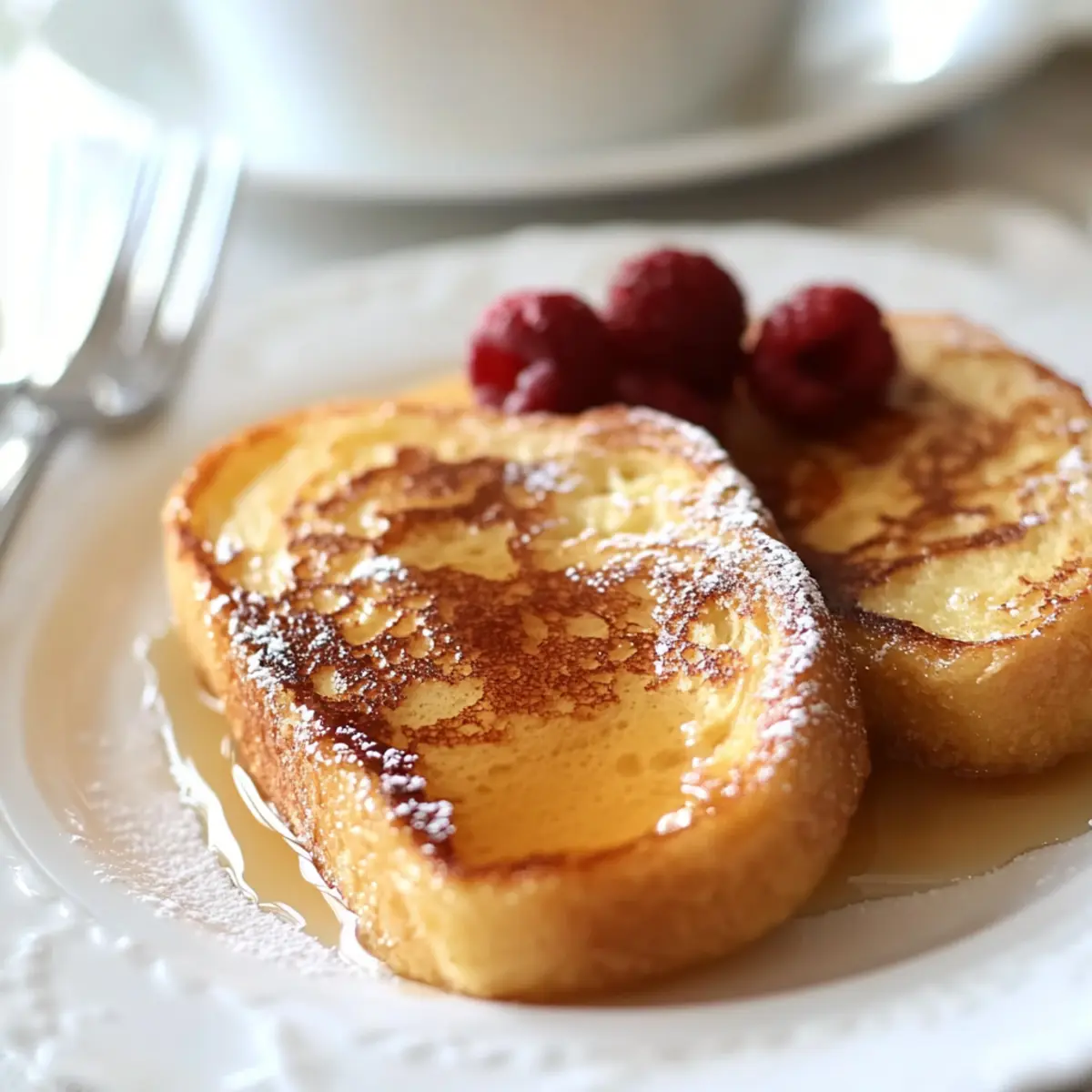
Why is this French Toast so special?
Irresistible Tastiness: Each slice of French toast is an explosion of flavor, thanks to the perfect blend of sweet vanilla and aromatic cinnamon.
Simplicity at Its Finest: This recipe requires minimal ingredients, making it accessible for anyone craving a comforting breakfast.
Customizable Delight: Use whatever bread you have on hand—brioche, sourdough, or even whole grain—and watch it transform into a delicious treat.
Quick & Effortless: In just a matter of minutes, you can serve a delightful brunch that feels gourmet but is oh-so-easy to make.
A Crowd Pleaser: Perfect for family gatherings or inviting friends over, this dish will have everyone asking for seconds. If you’re feeling adventurous, try serving it alongside a warming French Onion Beef soup to create the ultimate meal!
French Toast Ingredients
• The essential components for the perfect brunch dish.
For the Custard
- Eggs – Provide richness and structure to the custard mixture; use medium-sized, room temperature eggs for the best results.
- Milk – Adds moisture to create the custard; whole milk is standard, but almond or oat milk works too.
- Sugar (Optional) – Adds sweetness; can be omitted for savory versions.
- Ground Cinnamon (Optional) – Enhances flavor and pairs beautifully with fruits; perfect for elevating the sweetness of the French Toast.
- Vanilla Essence (Optional) – Adds aroma and depth to the mixture; enhances the overall flavor, especially in sweet preparations.
For the Bread
- Bread – The base of the dish; stale bread works best, though brioche, white sandwich, or sourdough can be delightful alternatives.
For Cooking
- Butter – For frying, giving a rich flavor and golden finish; can substitute with margarine or oil for a lighter option.
Embrace the magic of French Toast with these simple ingredients that promise a delicious experience!
Step‑by‑Step Instructions for Classic French Toast
Step 1: Prepare Custard
In a mixing bowl, whisk together 3 medium-sized room temperature eggs and 1 cup of whole milk until well blended. For added sweetness, mix in 2 tablespoons of sugar, along with a teaspoon of ground cinnamon and a teaspoon of vanilla essence if desired. The mixture should be smooth and creamy, a perfect custard base for your Classic French Toast.
Step 2: Slice Bread
Take your stale bread—brioche, sourdough, or white sandwich—and slice it into 1-inch thick pieces, ensuring each slice will soak up the custard efficiently. This thickness helps maintain a fluffy inside while achieving that delightful golden crust. Lay the slices on a cutting board, ready for the custard bath.
Step 3: Soak Bread
Dip each slice of bread into the prepared custard, allowing it to soak for about 30 seconds on each side. Be mindful to ensure that the bread is well-coated but not overly soggy, as this will help maintain its structure while cooking. Set the soaked slices aside on a plate as you prepare to cook them.
Step 4: Cook
Heat a non-stick skillet over medium heat and add 2 tablespoons of butter, letting it melt until bubbly and slightly foamy. Once hot, gently place the soaked bread slices into the skillet without crowding the pan. Cook for about 5 minutes on each side, until they are golden brown, watching closely to avoid burning.
Step 5: Check Doneness
After flipping, check the doneness by lightly pressing on the slices; they should spring back slightly. Once both sides are a deep golden brown and perfectly crisp, carefully remove them from the skillet and transfer to a warm plate. Repeat with any remaining slices, adding more butter as needed.
Step 6: Serve
Serve your warm Classic French Toast immediately, drizzling it generously with pure maple syrup or topping it with fresh fruits, whipped cream, or powdered sugar. This delightful breakfast treat is best enjoyed fresh from the skillet, inviting everyone to gather around the table to savor it together.
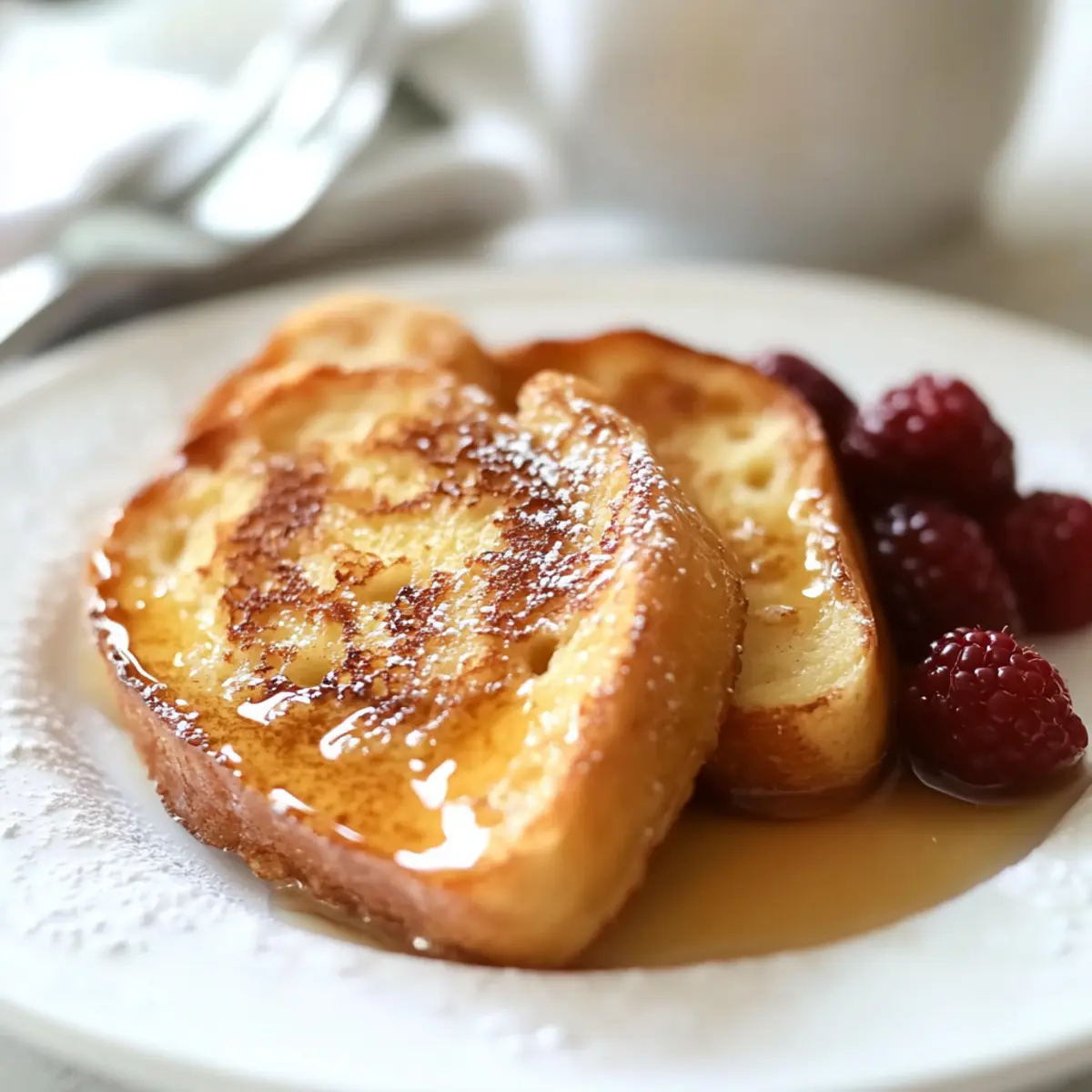
What to Serve with Classic French Toast
Indulging in a warm plate of French toast sets the stage for a delightful breakfast experience filled with flavors and textures.
-
Crispy Bacon: The salty crunch of bacon pairs beautifully with the sweetness of French toast, creating a perfect balance of flavors.
-
Fresh Berries: Vibrant strawberries, blueberries, or raspberries add a refreshing tartness that complements the rich custard perfectly, making each bite enjoyable.
-
Creamy Yogurt: A dollop of Greek yogurt adds a tangy creaminess that contrasts delightfully with the fluffy toast, elevating your brunch to gourmet status.
-
Powdered Sugar: A light dusting of powdered sugar gives a touch of sweetness and a charming presentation that invites you to dig in.
-
Maple Syrup: This classic addition is a must; the rich, warm syrup cascades down the fluffy toast, amplifying the comfort of each bite.
-
Nutty Granola: For a satisfying crunch, sprinkle your French toast with nutty granola. It adds texture and enhances the flavor profile beautifully.
Pairing these delicious elements with your French toast creates a memorable meal that will have everyone coming back for more!
Make Ahead Options
These French Toast slices are perfect for meal prep! You can prepare the custard mixture (3 eggs and 1 cup of milk) up to 24 hours in advance, simply whisking together and refrigerating it overnight. Additionally, slice the bread and soak it in the custard just before cooking to retain optimal texture. If you have leftovers, store them in an airtight container in the refrigerator for up to 2 days. When ready to serve, simply reheat the cooked slices in a skillet over low heat for a couple of minutes until warmed through, ensuring each bite is just as delicious as the first. This makes brunch a breeze on busy mornings!
Storage Tips for French Toast
- Room Temperature: French toast is best enjoyed fresh. If you must leave it out, consume within 1 hour to keep it safe and tasty.
- Fridge: Store leftovers in an airtight container in the fridge for up to 2 days. Gently reheat in a skillet or toaster oven to restore its delightful crispness.
- Freezer: For longer storage, freeze the cooled French toast slices in a single layer on a baking sheet for about 1 hour, then transfer to a freezer bag for up to 2 months. Reheat from frozen in the oven.
- Reheating: To reheat, preheat the oven to 350°F (180°C) and bake frozen slices for about 10-12 minutes, or until heated through and golden again. Enjoy your French toast just like fresh!
Expert Tips for Perfect French Toast
- Use Stale Bread: To achieve a perfect texture, always opt for stale bread. Fresh bread can absorb too much custard, becoming soggy.
- Chill Custard Overnight: For a quicker morning routine, mix the custard a day ahead and refrigerate. Just soak and cook in the morning!
- Don’t Overcrowd the Pan: Cook in batches to ensure even cooking. Placing too many slices can lower the skillet’s temperature and lead to uneven browning.
- Adjust Cooking Heat: If the French toast browns too quickly, lower the heat. A steady, medium-low temp ensures a fluffy inside and a golden crust.
- Experiment with Flavors: Enhance your French Toast by adding a pinch of nutmeg or a splash of orange zest to the custard for unique flavor profiles.
French Toast Variations & Substitutions
Feel free to explore your creativity in the kitchen and transform this Classic French Toast recipe into something uniquely yours!
- Dairy-Free: Swap the milk for any plant-based alternative like almond, coconut, or oat milk for a lighter twist.
- Flavored Bread: Use cinnamon-raisin or brioche bread for a flavor boost that adds a delightful sweetness.
- Savory Twist: Omit sugar and add herbs or cheese for a savory French toast that’s perfect for a brunch-time delight.
- Nutty Nibble: Sprinkle chopped nuts or seeds into the custard for added texture and flavor with each bite. How about some crushed pecans or walnuts?
- Spiced Up: Incorporate spices like cardamom or nutmeg to create seasonal flavors that evoke the warmth of fall.
- Fruit-Infused: Mix in a handful of berries or diced bananas directly into the custard for a fruity twist that infuses sweetness throughout.
- Baked Option: Prepare a baked version by layering soaked slices in a greased dish and baking at 350°F for about 20–25 minutes until golden and puffy—easy and great for feeding a crowd!
- Crispy Finish: For a crunchy exterior, dip each slice in crushed cornflakes or panko breadcrumbs prior to frying.
Remember, each variation opens up new delicious avenues to explore. If you’re feeling adventurous, why not serve this alongside a cozy bowl of French Onion Beef soup for a memorable brunch? The combination will leave everyone raving!
Classic French Toast Recipe FAQs
How do I select the right bread for French toast?
Absolutely! Stale bread works best because it absorbs the custard without becoming overly soggy. Look for bread that’s a day or two old, or even longer if stored properly. Options like brioche, sourdough, or thick slices of white sandwich bread are all excellent choices. If you can, give it a gentle squeeze—if it feels firm rather than squishy, you’re on the right track!
What’s the best way to store leftover French toast?
Very! Store any leftovers in an airtight container in the fridge for up to 2 days. This will help keep it from drying out. When ready to enjoy again, gently reheat your French toast in a skillet over medium heat or pop it in the toaster oven to restore that crispy texture!
Can I freeze French toast? How?
Absolutely! To freeze, first, allow your French toast to cool completely. Arrange the slices in a single layer on a baking sheet and freeze for about 1 hour. Once frozen, transfer the slices to a freezer bag, where they can be stored for up to 2 months. When you’re ready to eat, you can reheat the frozen slices directly in a preheated oven at 350°F (180°C) for about 10-12 minutes or until heated through and golden!
What should I do if my French toast turns out soggy?
Don’t worry—it happens to the best of us! If your French toast is soggy, it might be due to using fresh bread or soaking it for too long. To remedy this in future attempts, always opt for stale bread, and try to soak each slice for just about 30 seconds on each side. And remember, adjusting the cooking temperature to medium-low can also help achieve that lovely golden finish while keeping the inside fluffy.
Are there any dietary considerations I should keep in mind when making French toast?
Very! If you’re accommodating dietary restrictions, consider using plant-based milk (like almond or oat milk) for lactose intolerance or vegan diets. Also, if allergies are a concern, always double-check the labels on pre-made ingredients and opt for alternatives like gluten-free bread if needed. This dish can easily be customized to suit a variety of diets while still being delicious!
Can I prepare the custard mixture ahead of time?
Absolutely! In fact, preparing the custard mixture the night before is a fantastic idea! Whisk together your eggs, milk, and any flavorings, and store it in the fridge. In the morning, simply soak your bread and cook it up for a quick, cozy breakfast that feels like a treat without taking too much time. It’s a perfect way to have a leisurely breakfast ready in no time!
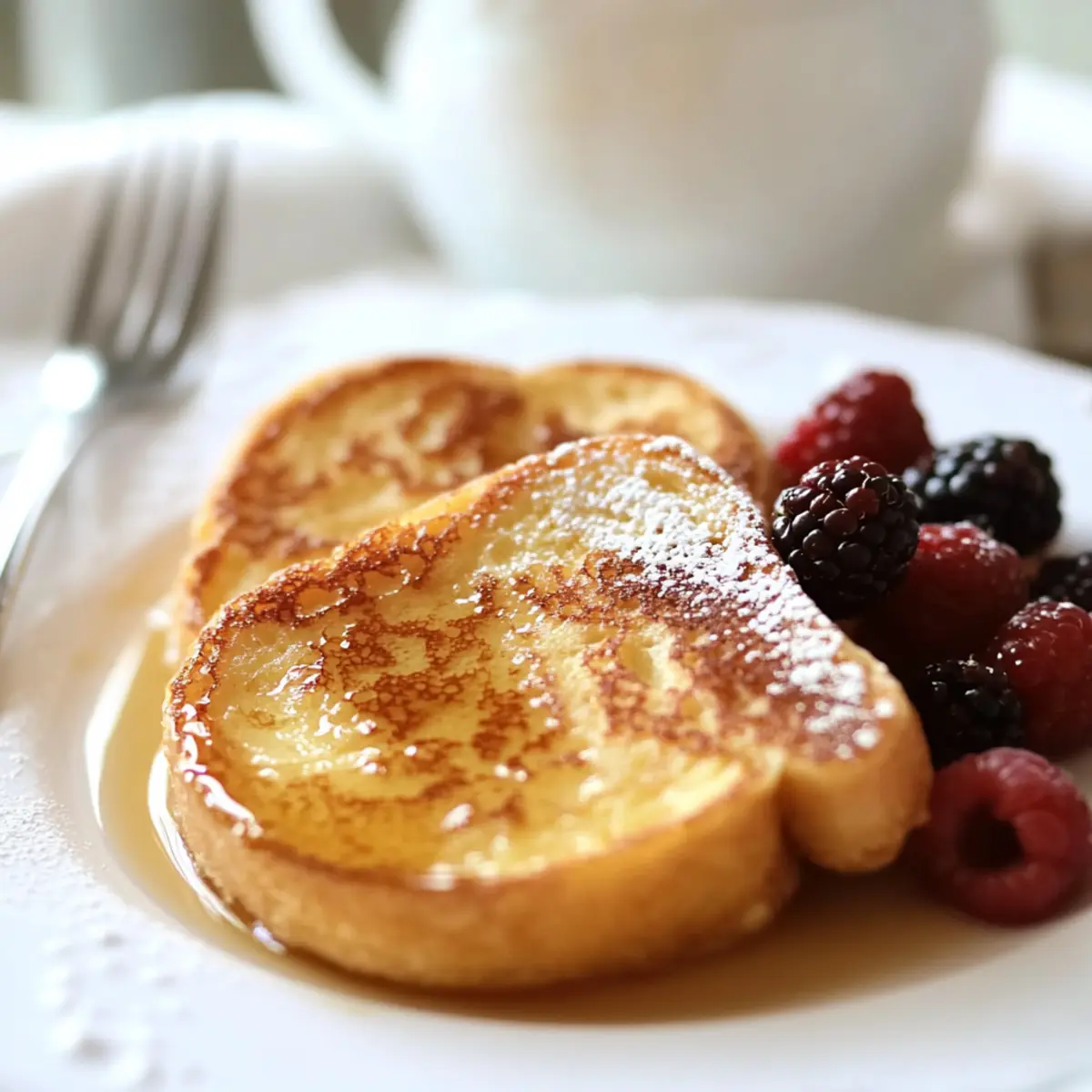
Irresistibly Fluffy French Toast for a Perfect Breakfast Treat
Ingredients
Equipment
Method
- In a mixing bowl, whisk together 3 medium-sized room temperature eggs and 1 cup of whole milk until well blended. Mix in 2 tablespoons of sugar, a teaspoon of ground cinnamon, and a teaspoon of vanilla essence if desired.
- Slice stale bread into 1-inch thick pieces and lay them on a cutting board.
- Dip each slice of bread into the custard, soaking for about 30 seconds on each side, then set aside on a plate.
- Heat a non-stick skillet over medium heat, add 2 tablespoons of butter, and let it melt. Place soaked bread slices into the skillet and cook for about 5 minutes on each side until golden brown.
- Check doneness by pressing lightly on the slices; they should spring back slightly. Remove once both sides are golden brown.
- Serve immediately, drizzling with pure maple syrup or topping with fresh fruits and whipped cream.
Leave a Reply